Physics
Dynmo hubs contain powerful permanent magnets embedded into the shell of the hub (the rotor), over a coil of wire (the stator).
- creates electromagnetic induction
- basically uses motion to create electricity (reverse a typical electric motor)
Most dynamo hubs produce six volts at a typical maximum power of three watts (but varies w/ speed). And smaller wheels produce more dynamo power due to higher RPM for the same speed.
Outside the light, they have to convert the AC power produced by the dynamo into DC (this circuit is known as a rectifier). And overvoltage protection.
Compliance
StVZO-compliant refers to bicycle lighting that meets strict German road traffic regulations, requiring a specific, non-glare beam pattern with a sharp upper cut-off to avoid dazzling oncoming traffic.
- These lights are certified (marked with a ~K stamp) and must be steady (no blinking)
- Color Temperature: Often required to be below 5000K
Issues
- Most dynamo lights cannot be powered by a battery... due to AC input/rectifier internals
- exception: Llum Dynamo Light
- Most battery-powered headlights cannot be run directly from a dynamo
- exeption: Light & Motion Rando 500 allow you to slowly charge the internal battery via a dynamo
Drag
Lab testing by Fahrrad Zukunft in 2014 showed even the least efficient dynamos only added roughly 3 watts of drag at normal riding speeds (20km/h) with the light switched off.
- https://fahrradzukunft.de/14/neue-nabendynamos-im-test
- Light switched on, you can expect losses of around 6 watts
- 30km/h (18mph) that figure rises to around 8 watts for the least efficient dynamos
The electricity produced by the generator, which in turn powers your lights, creates its own magnetic field. When this current passes through the stator, it works against the magnets in the rotor, increasing drag
- It's roughly the difference between riding with a dirty and clean chain
Types
Bottle dynamos are cheaper/easier to install, but noisier and slip when wet. They attach to side of rim/wheel and the seatstays.
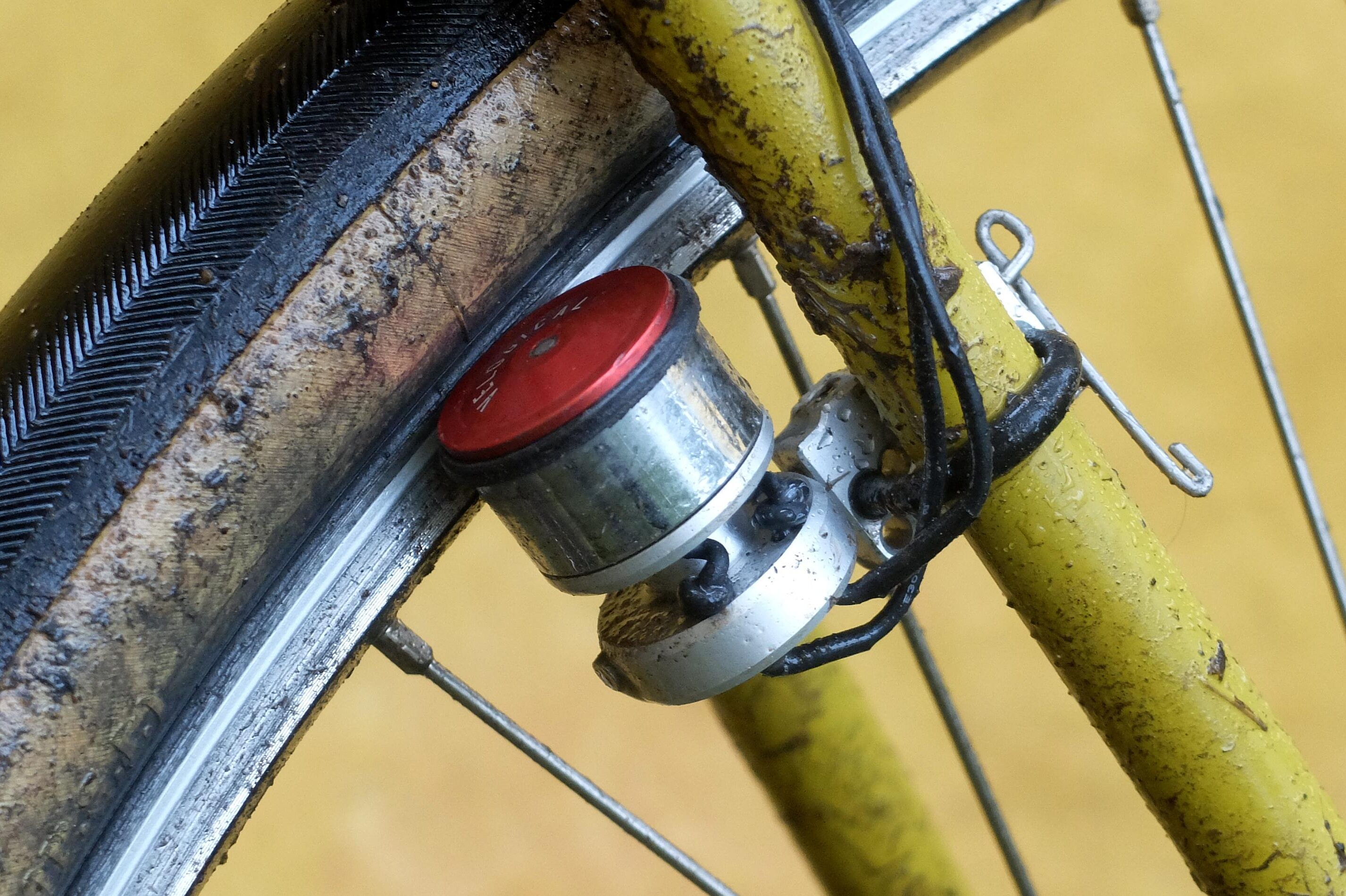
VS. Dynamo Hubs (what we are talking mostly about)
Purchase
Brands Hunt, Halo and Prime (and others) produce complete wheels w/ dynamo hubs.
Links
- https://www.bikeradar.com/advice/buyers-guides/bike-dynamos
- October 10, 2023